My in-laws came down a couple of weeks ago and we visited the coast. We had a shellebration, to say the least and enjoyed walking long walks along the water. This particular beach was, indeed, a lovely spot for shell finding. We kept our small amount of shells and returned the other findings back to mama ocean.
On the way down to the coast, we stopped at my 8th great grandparents’ graves. This was definitely premeditated on my part but I had actually decided that taking the jaunt off the highway with my husband, daughter, and in-laws was not a good idea. I didn’t want to drag everyone to a cemetery.
However, I had sent my husband the coordinates of the cemetery just in case. I really thought that we would not stop as we passed a highway sign indicating that the town of Wallace was coming up (where my ancestors are buried). But, when my daughter said she was hungry and I realized all the snacks were packed away in the back of the car, I knew that the cemetery would actually be the perfect place to stop and regroup.
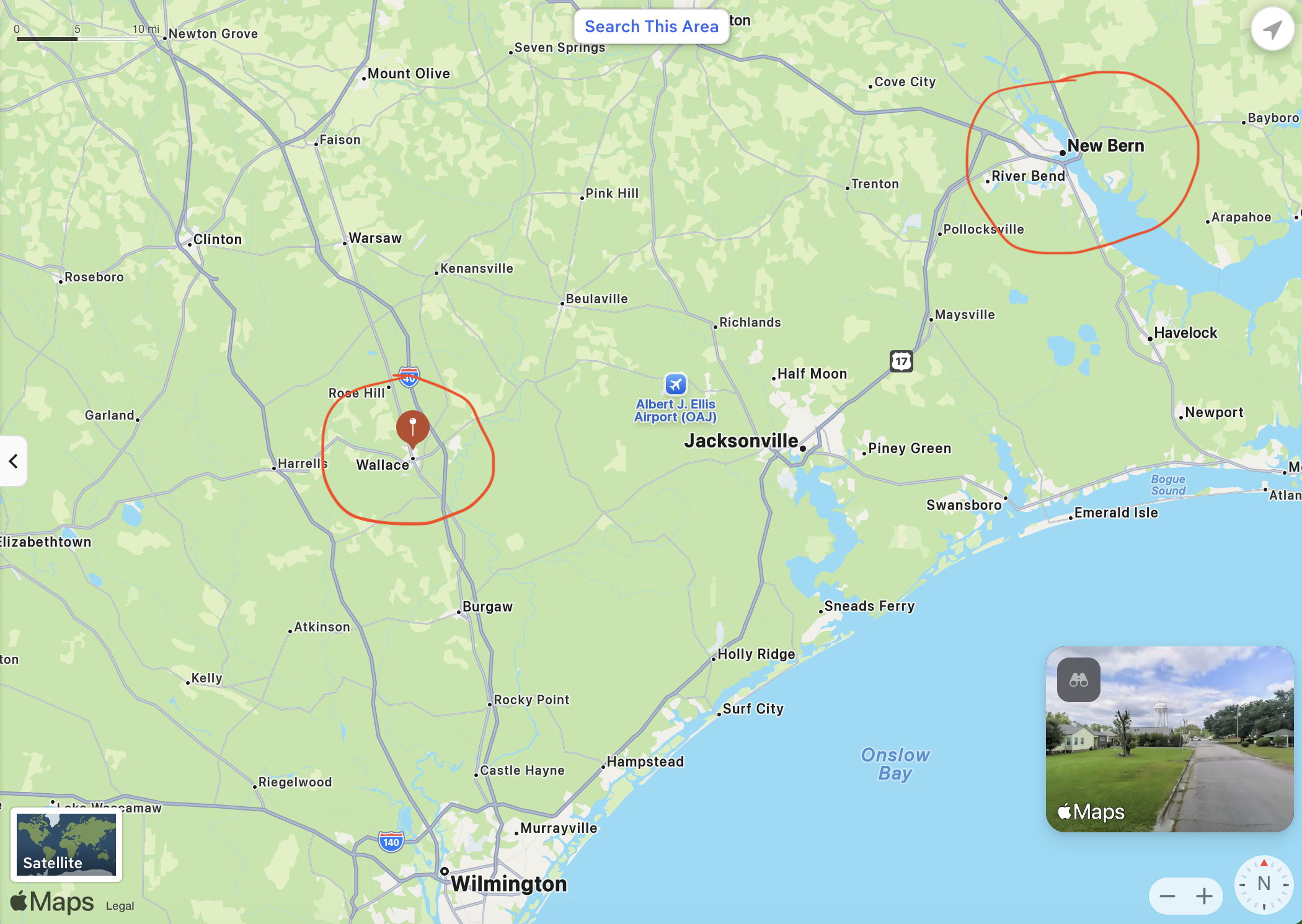
My husband plugged in the GPS coordinates that I had emailed him before the trip and in just a short hop off I-40, we were pulling into an auto mechanic shop. My husband said it should be ‘somewhere around here.’ I glanced down the direction of his hand wave and saw a lane of trees with a well mowed path next to it. I felt that that must be it but I wanted to ask.
I jumped out of the car and introduced myself to the mechanics at the auto shop. I asked a woman who had just walked into the garage if she knew of a cemetery. She said, ‘oh yes, it’s right down that way’ and pointed down the well mowed path.
A young man in a tie dye shirt with an excited mop of red hair then appeared out of nowhere and said that he goes there twice a week and would be happy to show me. I was touched by his enthusiasm and willingness. As we crossed the main road and started down the mowed path I looked back to see Dana, my husband’s mother following us. I waited for her to catch up.
As we walked the 100 yards to the cemetery, actually the oldest cemetery in the area, the young man noticed Dana’s accent. ‘You’ve got an accent, where are you from?,’ he said. Dana replied that she was Ukrainian and born in Poland. (Both of my husband’s parents are from Poland but ethnically Ukrainian).
Believe it or not this young man said that he was just in Poland a few months ago with a group that traveled from North Carolina. He said he was in Krakow the most and really enjoyed his time there. He said he thought that Poland was beautiful and wished he could have visited Ukraine but they wouldn’t allow him to travel there, of course. Dana was surprised to hear of his recent travels and they chatted about Poland and Ukraine.
As we neared the cemetery, I thought that it was rather uncanny that I would be visiting my 8th great grandparent’s grave in North Carolina with my in-laws from Poland, only to meet someone raised here who had just visited Poland. Who would have thought?
I asked our new friend and guide why he visited the cemetery so much. He said that his mother was buried there and that she had died of cancer when he was 12. I told him I was sorry to hear that as we approached the opening of the cemetery surrounded by trees. He said that his family had lived on the land across the street for the past 80 years. He said that his mother’s grave at this cemetery was the newest grave in the cemetery; that no one had been buried there for many, many years.
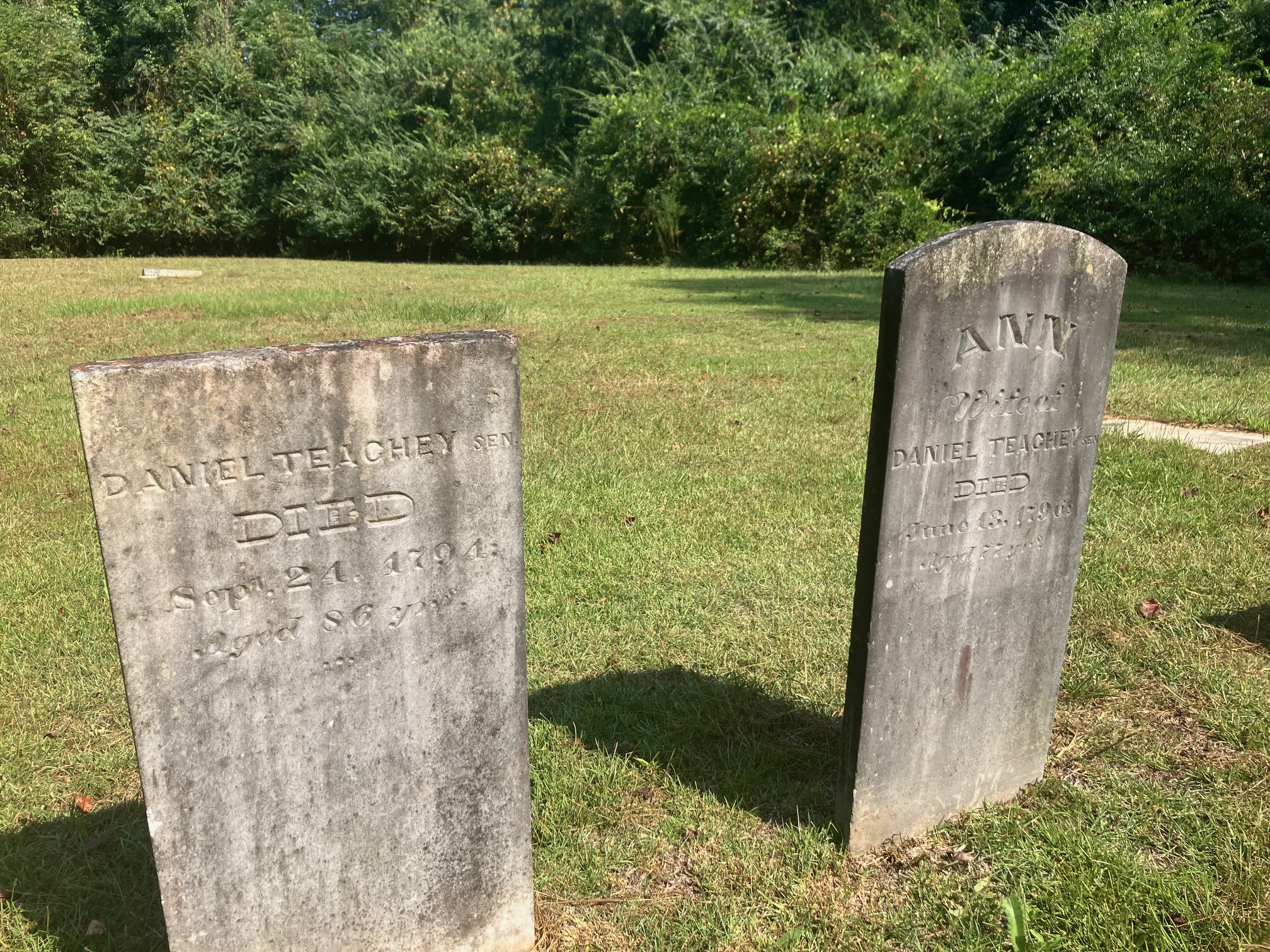
As we walked up to her grave he told us that today was her birthday. And, sure enough, we saw today’s date on her grave stone, September 18th. We offered her good blessings and then I walked across the cemetery to look at the old gravestones weathered by storms, time, and over 200 years of sun risings and settings.
Soon, I found the graves of my 8th great grandparents — Daniel and Ann Teachey (Tetsche) who were Palatine Germans and the first settlers of New Bern, NC (the 2nd oldest city in North Carolina behind Bath). Daniel was about four years old when he came over with his father Johann and his wife (to my knowledge, no one knows where their graves are). I also found grave sites for members of the Boney family (Swiss) who are also in my family tree.
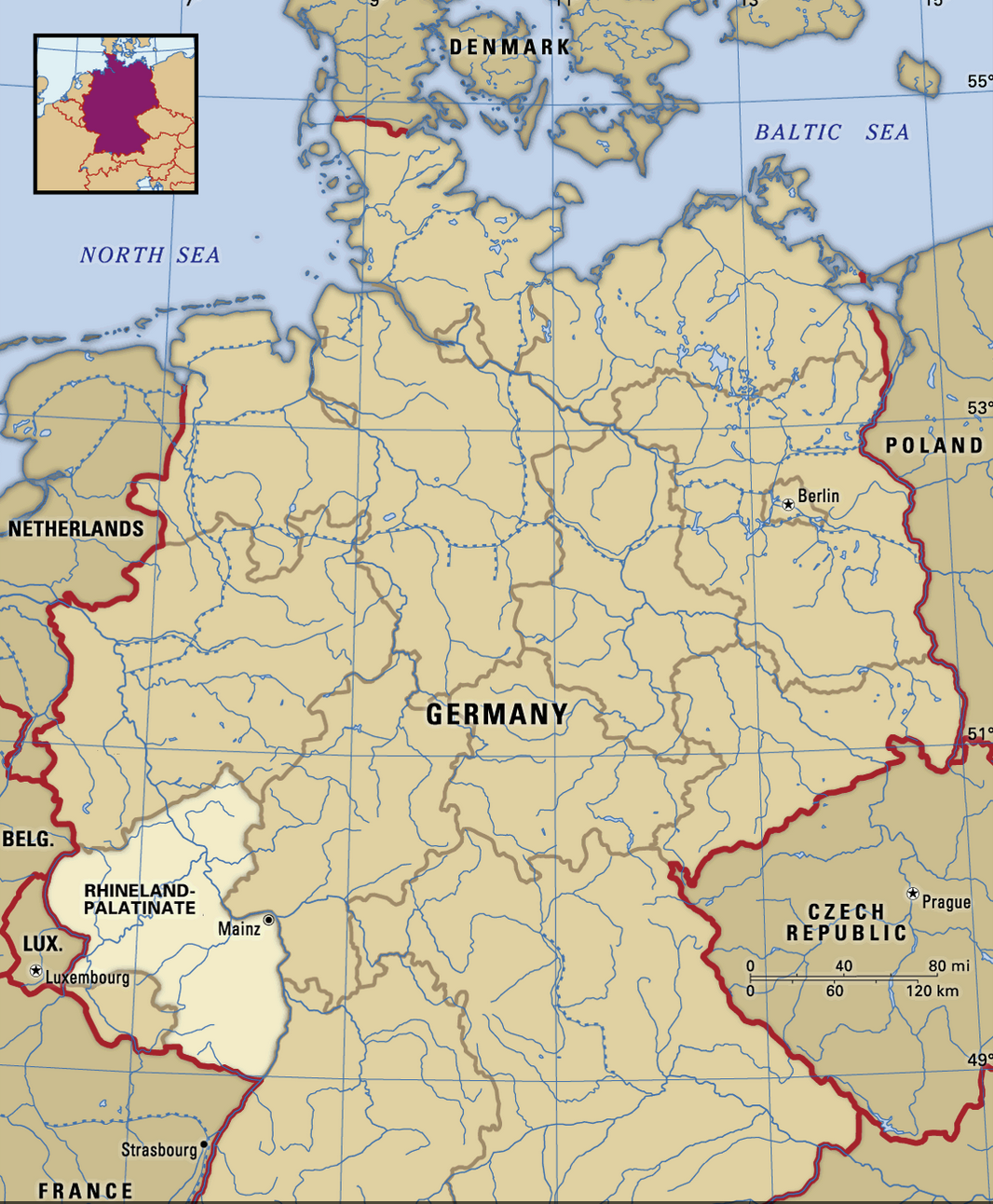
The German Palatines had a harrowing journey from war torn Rheineland to wintry England to what became New Bern, NC in 1710. After surviving this multi-year journey (of which many died from disease, lack of food, severe weather, or other causes), they were soon thrown into the Tuscarora War (1711-1713)…the bloodiest battle, they say, in North Carolina’s colonial history. You see, Christoph von Graffenried of Switzerland, had brought these desperate Palatine Germans and poor Swiss to an area that was Tuscarora land.
If I recall correctly, about 30% of the original settlers to New Bern died during the Tuscarora War. Eventually, Graffenried’s New Bern colony failed. Many Tuscarora traveled to the North to New York to join Haudenosaunee Confederacy while others stayed in more remote areas of North Carolina like the area that became Robeson County.
As for the the settler survivors, they appealed to the Queen of England for land that had been promised to them by Graffenried and the other financiers. They were eventually offered land grants a bit more inland from the coast. That is how my Daniel and Ann Teachey ended up in Duplin County, NC…in a town eventually called Teachey (next to Wallace).
There, Daniel ran a turpentine farm, slashing long leaf pine trees and collecting the rosen. The rosen and turpentine were then floated down the river to the coast where ship builders could utilize the waterproof and sealing abilities of these pine trees. At 86 years old, Daniel passed away in the late 1790s. Ann, his wife, passed away two years later.
Two hundred and thirty years after his death, his 8th great granddaughter visited him and his wife’s grave to let them know that I remember them and that I will tell the stories. They have not been forgotten — the good and the bad and everything in between.
Yes, they did take Native land. Yes, they did have slaves (at least 20 of them as recorded in his will).
So many questions arise for me. When they traveled to the so called “New World” did they understand that they would be taking other people’s land and owning people? I don’t think so but educate me if you know otherwise. I think they did what they had to do to survive. At the same time, my ancestors willingly took up the practice of owning slaves…Africans that were taken from their traditional homelands, had survived the treacherous ocean journey in abysmal living situations, and were sold to land owners against their will to live a life of servitude. My ancestors also fought in a war against the local tribe, the Tuscarora.
The push and pull factors of the economy created by the mercantile class have always been gruesome and ugly. Early America was a collection of corporate colonies ruled by this mercantile class and so many people were caught in the waves of those waters. I wonder if we have even broken away from this system even today?
Alas, what would I have done in their situation? Did their descendants strive for another way of life free from owning slaves? That is something I will have to review in my research.
On the way out of the cemetery, I found a wild turkey feather scattered among others. Turkey to me means family and nourishment and togetherness. I collected one of those feathers, washed and dried it later, and put it in a special place to keep.
As our guide, Dana, and I crossed the road to the auto shop, I felt us slip back into the modern era… My thoughts drifted from imagining what life was like on this land 250 years ago and back into the present. Dana and the young man exchanged final remarks about Poland and Ukraine… I waved goodbye to him as my daughter darted towards me for a hug…admonishing me for ‘taking too long at the cemetery.’
Walking the lines of my family’s ancestry continues. Every time I walk a line, I learn something. It always seems like the information was always waiting there for me; waiting for a time when I could digest it and understand it.
Some of what I learn is obvious and relates to history, timelines, and place. But, by walking the family lines, I also am reminded of the vast network of stories that I am part of…that *each* of us is a part of… If we actually take the time to pull on a thread of that network, an innervated part of our family tree responds and reveals to us that it was always there. Our awareness brings renewed circulation to those branches of the tree.
I do sense that the past informs us and influences us whether we explore it or not. I muse to say that understanding the past allows us to navigate the present with more grace and grit than not knowing.


Such a good read. Thank you Lindsay, for sharing your history and trip with us.Dawn Morgan Sent from my iPhoneOn Oct 1, 2026,
Thanks, Dawn — I appreciate the feedback! I hope you and your bees are well ❤
Hi, Lindsay!
Wow. Your stories and writing are so fabulous! You don’t know me, so don’t know that’s a compliment I rarely give. I, too, have found exciting old stories of my ancestors from the Mayflower and beyond. These people were all amazing. To my knowledge, no self respecting Pole or Ukranian would ever have had slaves, but my Irish did bring indentured servants who wanted to migrate over with them and gave them their freedom after helping with the house and land for 7 years. Maybe your ancestors gave the African Americans a better life than actual slavers would have or were? Maybe they saved them for a few years. Hard to say. I know my family never had slaves and one ancestor was a conductor on the Underground Railway. Hard to come by. I love to watch Henry Gates PBS episodes on peoples ancestry.
xoxo
Hi there Barbara — thanks for the compliment! As for Poles owning slaves…they did have Ukrainians in a serfdom during the Polish-Lithuanian Commonwealth from roughly the late 1550s to 1800. As for my ancestors. It was unusual for Palatine Germans to own slaves. Many Palatine Germans came over in groups and were able to subsist in that way with no need for labor outside of themselves. However, it could have been the disruption of the original colony and the resettlement of people after the failed colony to more rural, inland area that facilitated the use of slaves for the Teacheys. The area that they landed in on the coast was a Cavalier area — English people known as Cavaliers were known to own slaves and have plantations, for example… The Cavaliers are known for hierarchy. Some Palatine Germans — like my Reichman/Rickman/Richmonds ancestors — that ended up in the mountains of NC did not own slaves (this was the territory where the ‘Borderland’ people of England/Scotland settled). My ancestor on this other branch married a woman that was half Native and half English. I’m not sure if the English crown recommended or required a certain occupation on the land that they offered. For example, my Teacheys were scoring pine trees and gathering rosen to be sailed down the river to the coast to be used to seal ships in the shipbuilding industry. Such an occupation would require more labor than the family could offer themselves. I’ll have to look into how they got involved in that occupation of gathering rosen and making turpentine.
I do know that there is an African church in Wallace that has graves with later dates…with births after the Civil War, for example. A number of individuals buried there have the surnames Boney, Wells, Wallace, and one with the surname Teachey. It is apparent that all the early families in that area had slaves.
Thanks, Lindsay! You could write a really fun history book!!!
xoxo
That’s a wild story but sometimes it takes someone like you to notice the connective aspects of life of which they are so many. If only we could live to be 200 to make more connections. Thank you for sharing
It was a situation full of synchronicities of which I appreciate so much. It seems that any time I walk a family line those synchronicities come up…but this particular series of events was pretty wild.