This past September, I hosted an herbalism workshop on relaxing nervines at Umstead Park. The park was busy and humming with hikers and those having a picnic. It was a beautiful day.
I brought my tablecloth, basket herbal infusions, handouts, and extra catnip plants in gallon sized pots to sell. The catnip plant that I had planted a couple years ago had reseeded in my garden quite well. I was eager to get the catnip plant starts out to new gardens.
The focus of our day was discussing relaxing nervines. We sipped, I presented, and they shared and asked questions… I’ll share some of the highlights of our time together
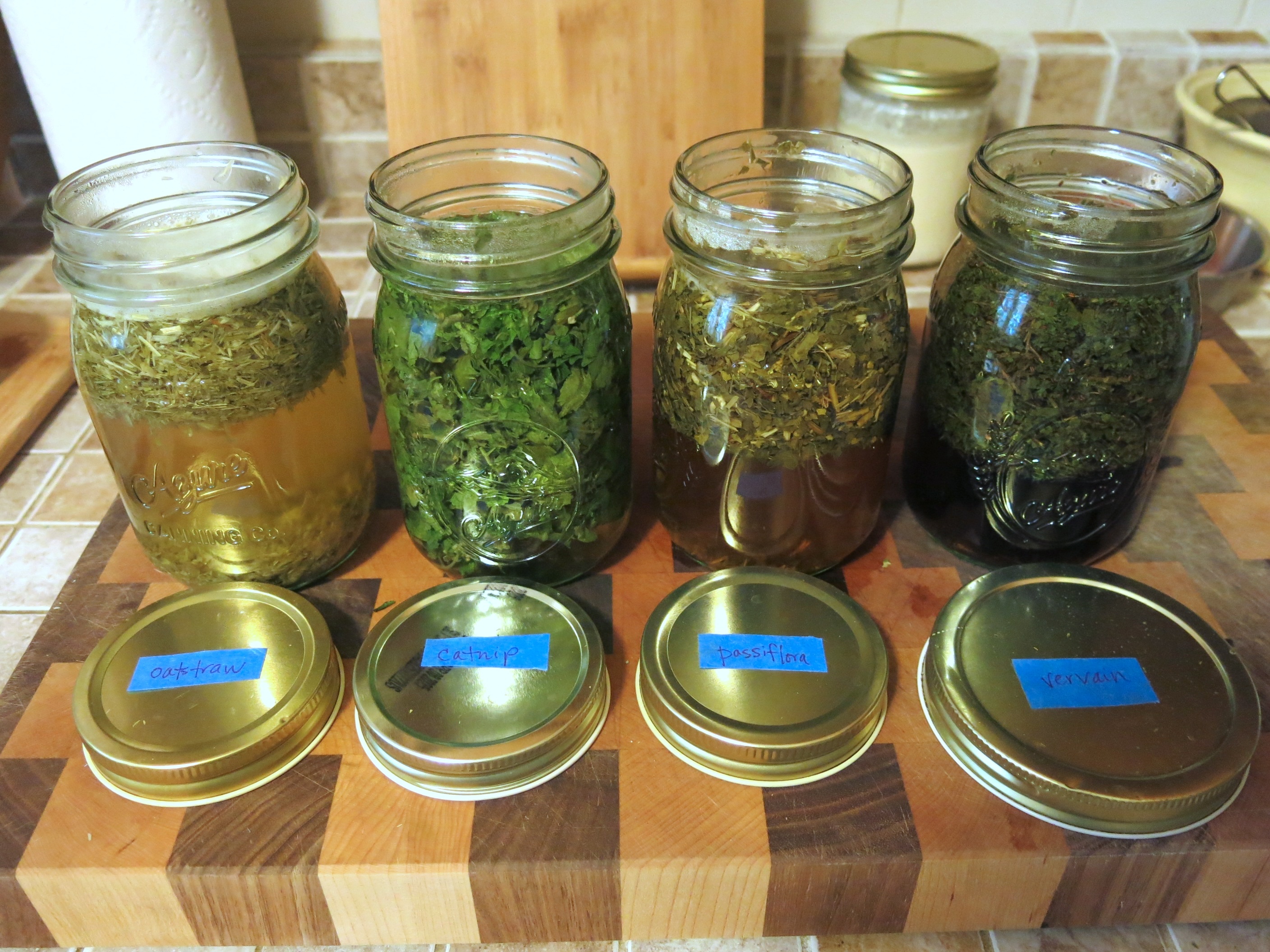
Passionflower (Passiflora incarnata), with its earthy taste, wasn’t desirable but also did not make anyone squirm. Insights around its use for calming the mind and breaking the cycle of circular thinking resonated with people. I shared about the plants botanical structure, the way it has a symbiotic relationship with certain ants, and how gulf fritillary caterpillars depend on its plant material for food.
Next we moved to Blue Vervain (Verbena hastata). I anticipated their expression as we sipped and, as expected, there were faces and cringes as people realized her very bitter taste. Of course, this speaks to her action on the liver and gal bladder, but it’s always a surprise to meet the likes of a bitter tasting herb. They don’t mess around.
I pantomimed the rigid botanical structure of vervain, commenting on its silica rich tissues and also its ability to help with rigid states of mind and bodies that hold rigidity due to this. The typical place for this is the shoulders and neck for people who need vervain.
Catnip (Nepeta cataria) had its turn next. The slightly pungent but aromatic taste of catnip was agreeable for most folks but they were still searching to place the taste in their known experiences of the tongue. I told them about its use as an ally for babies with colic, for fussy babies, and for colds and flus in our little ones. It is a diaphoretic herb (like vervain, but try to get a little one to sip that!) and sipped on as a warm tea it will gently open the ‘vents’ of the body, encourage perspiration, and lower a fever to keep it in a healthy range. The combination of relaxing smooth muscles along the GI, releasing excess heat, and calming the nervous system makes it a great herb for our little ones.
Catnip is a curious plant. Apparently, the reason cats are attracted to it is that the aromatic oils of the plant smell like anal gland secretions of a cat. Not all cats are attracted to catnip, but most are. I can attest to the fact that anytime I have grown catnip, a resident cat from who knows where finds the plant and nibbles on it. At my current home, a neighborhood cat even rolled on top of half of my plant and flattened the other half in its fit of ecstasy.
Finally, we arrived at Oatstraw (Avena sativa). When sipping on this one, everyone’s eyes glowed and all their mouths said MMMmmmMMm. Oatstraw, with its slightly sweet and earthy taste is an easy sell. One woman said, “I’m glad you said the best for last!.” Another woman wanted more and more of this tea to sip on and her eyes widened as she said, “This. This is what I have been wanting.”
With it’s magnesium and calcium rich properties, oatstraw is amazing for women (and anyone, really). Those with Celiac would not be able to partake of oatstraw because a protein called avenin is very similar to gliadin (found in gluten containing grains). However, I have seen that those with gluten intolerance or an allergy do just fine.
Oatstraw does not have aromatics so you can make a really strong infusion and enjoy a lot of minerals. Its supportive and restorative to a burned out nervous system. The milky oat seeds of the oat plant are used in tincture form and extract the medicine from the latex of those young seeds. Milky oats tincture brightens and perks up the mind while rebuilding a depleted nervous system. What’s not to love about that?
***
By the end of our time together, these participants had four steadfast herbal allies to call upon in times of need. One woman in our group had already experienced the benefits of passionflower as she had been a client of mine; well her son was the client, technically. He had been washing his hand obsessively as a result of covid times. Passionflower tincture helped him break that circular habit and find more peace with microbes.
Another woman from our workshop asked for advice on where to purchase herbs locally. I pointed her to Harmony Health Food Store and said that they had a good bulk herb section. She texted me later that day and showed me the herbal tea blend she had put together. The next day she emailed me and said that she had not been getting good sleep and that the herbs helped her rest deeply the night before.
Of course there is more to say about each of these herbs. I simply wanted to offer broad brush strokes on each of these. And, there are so many other relaxing nervines like skullcap, lemon balm, lemon verbena, and chamomile. Finding a few relaxing nervines that have other actions and energetics that suit your constitution is important. They will become reliable tools in your herbal toolbox as you navigate life.
I have two more workshops coming up. If you’re in the area, join me!