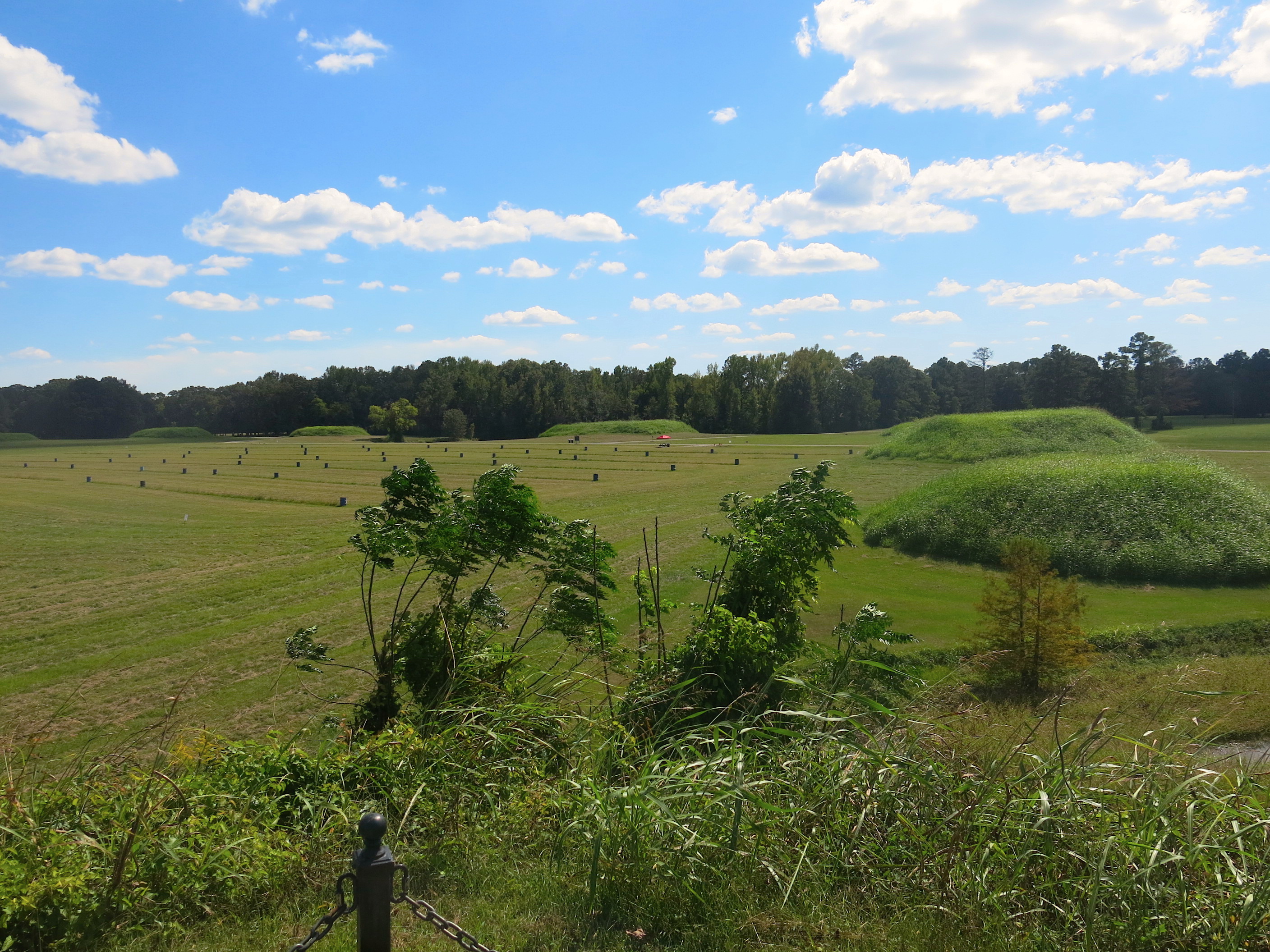
I took my daughter to Moundville in Alabama this past week. What many Americans don’t realize is that Moundville (a series of 29 platform mounds built by the Missisippian Mound-builders about 1000 years ago) used to be something like the ‘New York City’ of North America. Moundville was the central hub for trade and activity and it had a robust and thriving community.
Some time in the 15th century, Moundville disbanded (possibly due to a drought) and the peoples separated into what became the ‘Five Civilized Tribes:’ Cherokee, Choctaw, Chickasaw, Creek, and Seminole (and yes, the term ‘Five Civilized Tribes’ is a term developed by Euro-American settlers). There’s a much more complex and storied history there…but you’ll have to dig into that yourselves as I am still learning!
It’s interesting to me that this terrible drought occurred (potentially) in the 1450’s… Just 100 years later, DeSoto would arrive at the Mississippi River and witness all of these empty compounds of mounds. I’m sure the Europeans diseases brought with them only amplified the losses during that time for a number of Native American tribes.
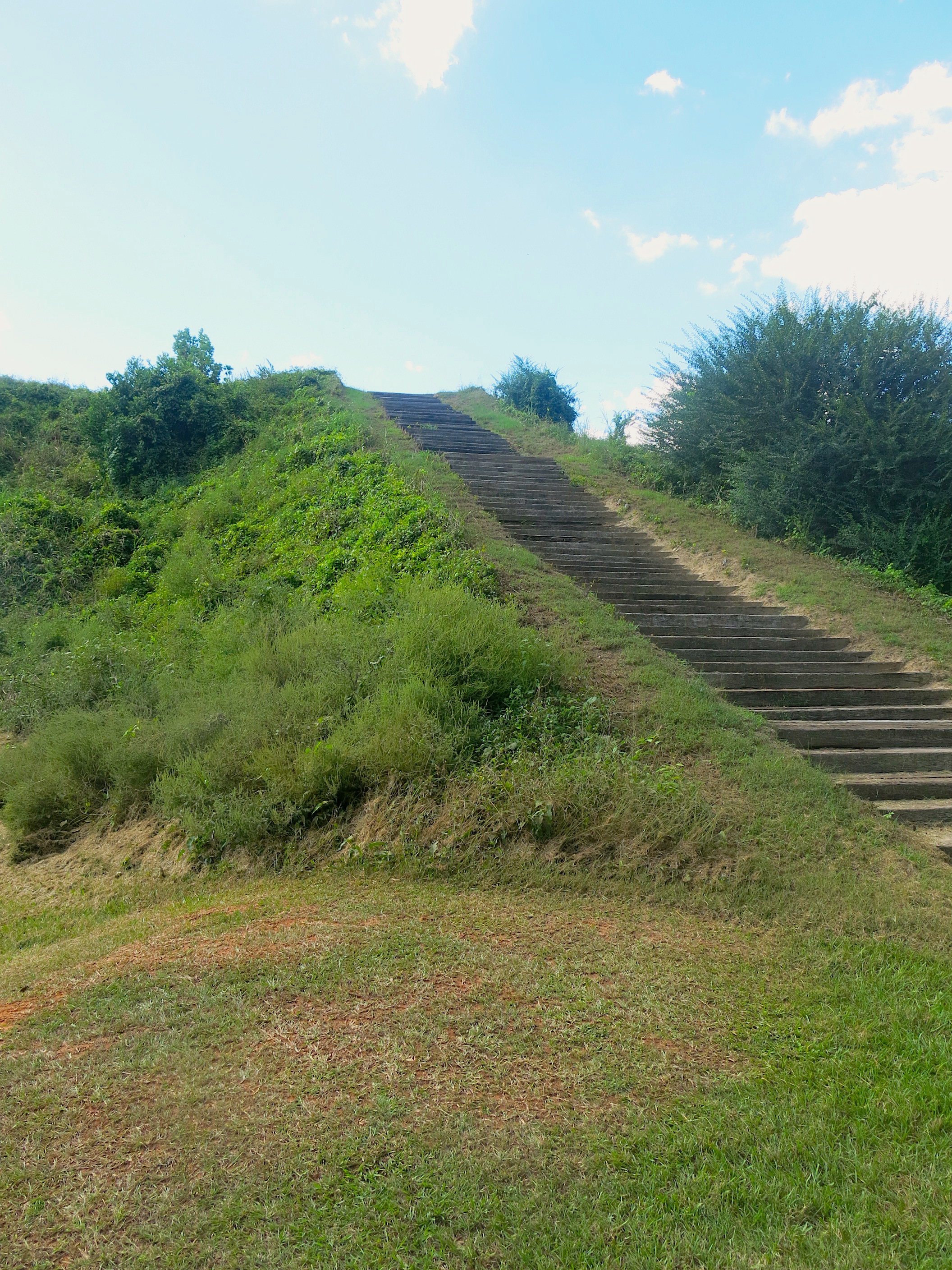
The site is located near Tuscaloosa, Alabama on about 185 acres of preserved land. Moundville has a museum and, of course, the grounds. Two of the mounds have stairs for you to walk up to the top… One of those mounds is near the museum/visitor’s center where I took the picture at the beginning of this post. The other mound you can climb is in the image just above. This is said to be the chief’s mound and the ‘third story’ has been lost due to weathering and time.
***
I have been to this location twice before. My recent trip with my daughter was a new experience. Many artifacts were removed from the museum cases and letters were placed there to explain that the museum and the various tribes-members are discussing which artifacts will be for the public eye. Basically, all the funerary objects had been removed.
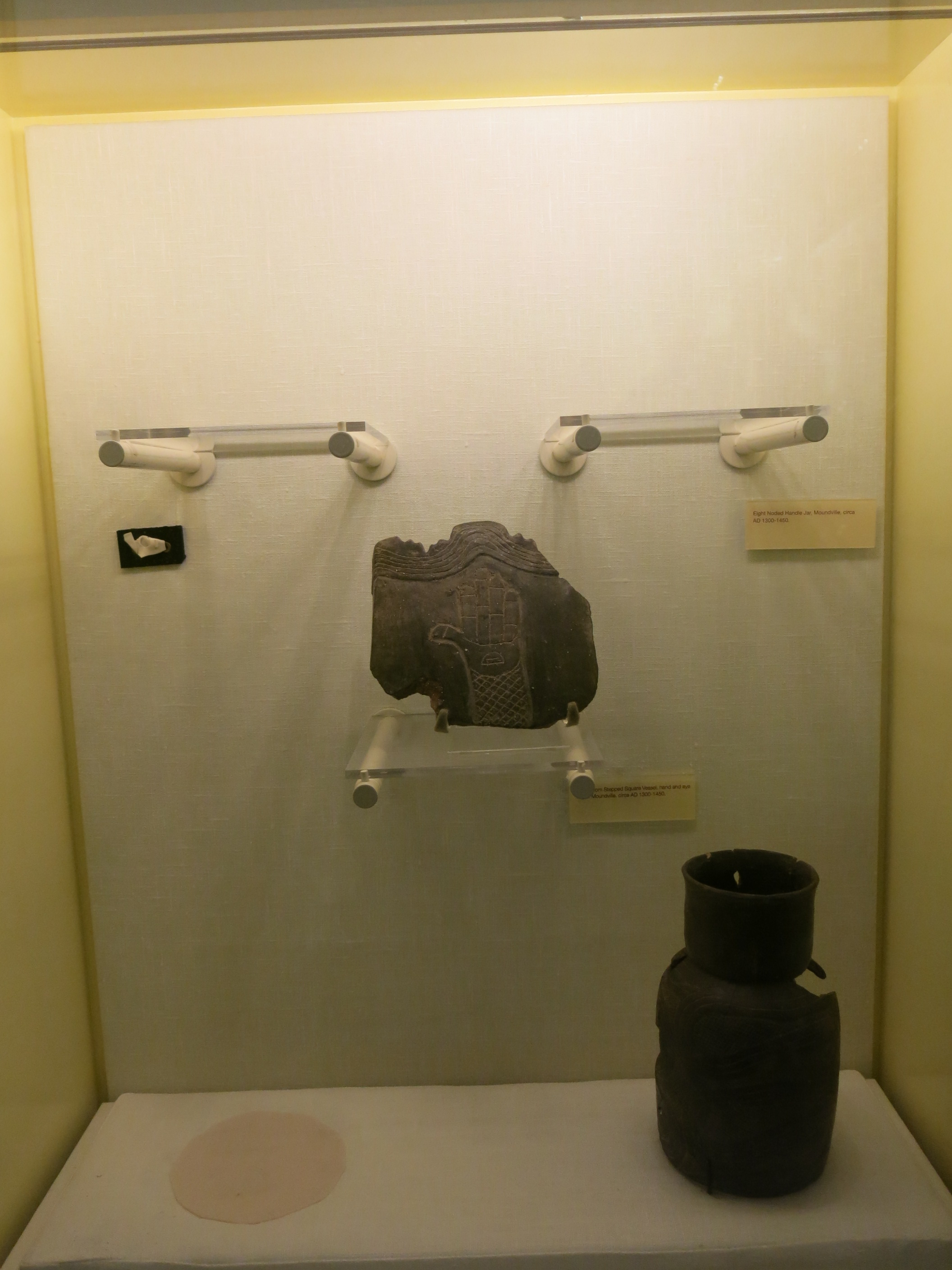


I believe that one of the largest archaeological excavations in North America happened at Moundville in the 1930s. There have been many decades of research that have happened here because of the significance of this site.
I think it is so necessary that the discussion is happening regarding how the descendant tribes of the Moundville culture want to share their story. I am sure it is a difficult conversation in many ways…but it’s one that needs to happen. Hopefully, the tribes members will find a meaningful way to educate the public about their culture.
I definitely know that I have learned a tremendous amount by visiting Moundville over the years. However, I honestly do think that many of the exhibits have a sterile or overly-academic bent to the information provided. There were many assumptions about the Moundville culture in some of the informational placards that seemed to view these people more like specimens instead of a vital, rich, highly creative, and sovereign people. I think some of the info was outdated, too.
I’m curious to see what will happen with the grounds and the museum.
***
I remember going to this museum for the first time around 2012 or so…and then again in 2016… I was amazed by the ceramics…the symbolism…the cosmology recounted at the exhibit…the skillful craftmanship of the limestone discs… Unforgettable, really.
I was inspired by one of the limestone palettes at Moundville that showed a hawk moth. I drew a replica of this hawk moth back in 2016.
***
Sadly, most modern Americans have not even heard of this place (or even Cahokia or other Mississippian mound locations). It would benefit us to learn and understand more about the Mississippian mound builders. They were a rich and resourceful people whose descendants still remember and retain the stories and the languages.

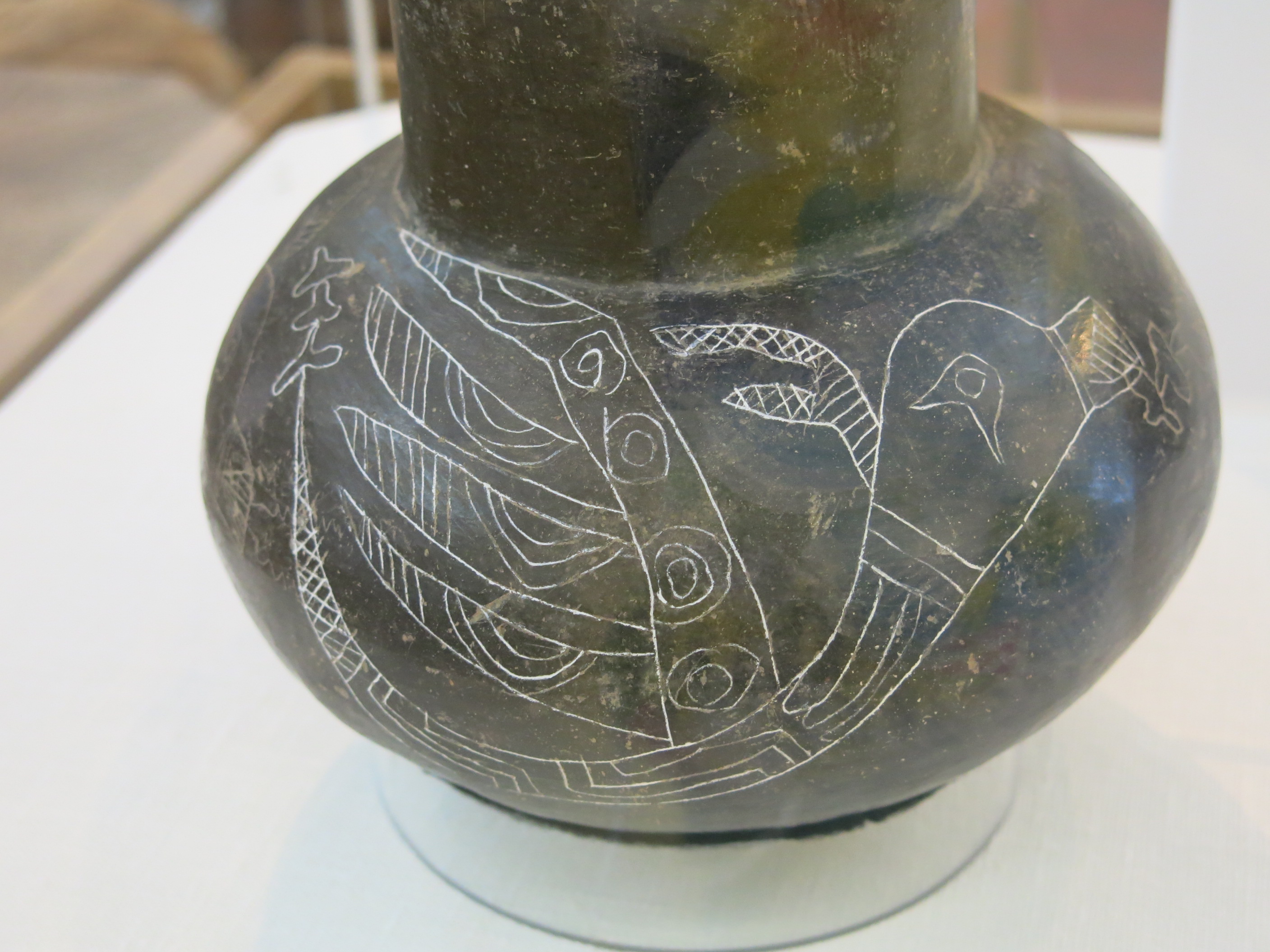
While at the museum I also learned that 200 Moundville artifacts were stolen from the University of Alabama back in the 1980s. They had two vessels that were recovered, one is pictured above. Apparently, there is a pretty fierce black market for Native American artifacts. Yet another problem with archaeological excavations and location of sites.
 Lindsay Kolasa