
Last year, friends visited us in Eastern North Carolina. While staying with us they were practicing their string figures like Cat’s Cradle. My friend teaches a parent-child class at a Waldorf school. So, it makes sense that they would be exploring such a subtle art form. When I watched them, something stirred in me from my childhood…I remembered doing that at least a few times growing up.
Soon after that, I stumbled upon a used book called (aptly) ‘String Figures and How to Make them,’ by Caroline Furness Jayne. Apparently, it was written in 1906 and it is THE BOOK when it comes to string figures.

Recently, while on a video chat with my mom, my daughter and I showed her the series of string figures we had been working on –> Cat’s Cradle to Soldier’s Bed to Candlesticks and so on… My mother then told me that my Mississippi grandma loved to do string figures…she knew all sorts. She even could move a marble around the strings when doing string figures.
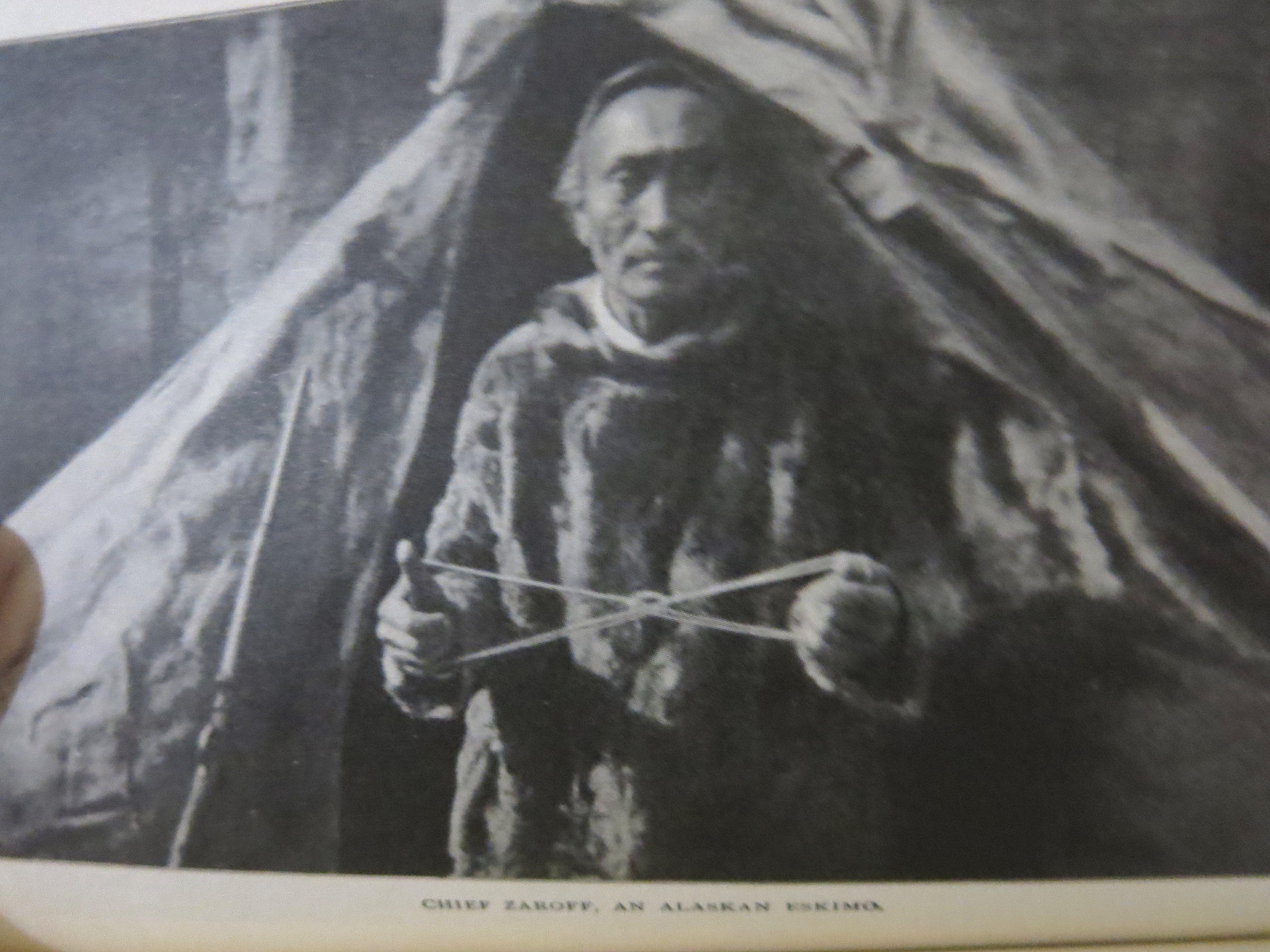
While reading the used book on string figures, I realized that string figures are a universal concept. Every continent has cultures that utilize string figures…and many peoples use the same figures and shapes. Apparently, Jacob’s Ladder is one of the most common shapes across the globe.
So, as I worked with my daughter…I began to ponder what string figures could be doing for us. Why are we so drawn to them? I know that we had to work together to create them…there is a social aspect to it. And, it’s not a competitive game…we are working together…creating together. There are plenty of string figures that can be done on your own, as well. This would offer endless play for someone.
Then, this paragraph stood out to me in a scientific paper:
“The making of string figures has been linked to the development of mathematical thinking. In the context of niche construction theory, it is now widely understood that toys that mimic tools play a critical role in the ontogenetic development of human cognition. This has likely been the case for most, if not all, of human history. The oldest archaeological evidence for string is coeval with the emergence of behavioural modernity in Homo sapiens in Africa. Given the evident ubiquity and hence likely antiquity of string figure making, this behaviour may—as a ‘tool of the mind’ — be implicated in the development of foundational human mathematical and spatial reasoning. As we argue below, this may have had downstream effects on the evolution of other cognitively demanding string technologies such as ropemaking, knotting, netting, and weaving.”
As my daughter and I play with string figures, I feel like I’m tapping into something primal, patient, and plentiful. A simple string that is about 6 feet long tied into a 3 foot loop becomes a thing of endless possibilities. It’s also a universal language that I could carry with my anywhere.
Out of curiosity, I’ve been asking people if they knew of or remembered any string figures. Many folks talk about an elderly person showing them when they were young. They speak of doing string figures while riding the bus to school, visiting their neighbor, or just while playing. In my hometown in Mississippi, folks say they remember doing ‘cup and saucer,’ ‘crow’s feet,’ and ‘Jacob’s Ladder.’
However, I don’t think I’ve seen anyone playing with string figures in decades. It is becoming a lost art in modern society. I think the elderly would benefit from picking up some string again…and I think children would benefit as well. Why aren’t they teaching this in school?
So, yes. I do. I think there’s something that string figures can continue to teach us. If we are ever going to continue to use our hands, our minds, and our sense of creativity…I think we should pick that 6 foot string back up…tie a loop…and keep the tradition alive…
 Lindsay Kolasa