I shudder to think about all that was lost when the American Medical Association (AMA) did not include Eclectic, Phsyio-Medical, and other types of Botanical Medicine-based schools in their Flexner Report (1910). Dozens upon dozens of practitioners of botanical medicine were discredited by the AMA and, in the early 1900s, we LOST the momentum we had with botanical medicine in the US. With the undermining of their work, Eclectic Schools of Medicine (along with other botanical medicine schools), steadily closed their doors (the last Eclectic School closed in Cincinnati, Ohio in 1939).
Did you know about this history? Most people don’t.
Just think about where our health care could be if we could have maintained these hearty, skillful, and resourceful botanical practitioners and their learnings! I will add that Eclectic Schools were known to have a number of female doctors and African-American doctors graduate from their schools. They were a diverse community of practitioners. They also sought to use the gentlest and most effective treatment for their patients.
***
It wasn’t until the 1960s and 1970s that self-taught, herbal practitioners started dusting off the LARGE tomes of these early, botanical researchers and physicians that the botanical revival in the US was born again. Many early botanical doctors, learned about the herbs they worked with from Native American medicine people…and, sometimes, from arriving immigrant communities and the botanical information they brought with them. It truly is a shame that these teachings and this information was suppressed in the early 1900s.
I will say this, though…in the mountains of Appalachia and in the Deep South, where Southern and Appalachian Folk Medicine were practiced, these healing ways lived on in spite of the AMA’s actions. This system of medicine had (has) roots as deep as the earliest colonies, and it was a proper blend of Native American, African, and European influences. Considering that this collection of practitioners were typically in rural and remote areas, they were even lesser known than the Botanical Physicians I spoke about earlier.
***
Every time I read articles or posts about these botanical physicians my heart hurts. It really does. I realize how much we lost when they were discredited. And now, Herbalism is scrambling to get its footing again.
And…we REALLY need an integrated medical system in this country! It’s not either-or — we need both-and!!! We need conventional medicine and we desperately need to integrate botanical medicine into what we offer people in terms of medicine.
It often feels like Herbalists overcompensate so that they are taken seriously. And, I know where this overcompensation comes from…look at our history.
At the same time, considering I am an Herbalist, I’ve gotten to know a number of practitioners form California to North Carolina… I’ve heard their struggles and successes… I’ve heard about their journeys in practicing herbalism and meeting with clients. I’ve heard about their on-going determination to keep herbalism accessible to all people while trying to make ends meet themselves.
I’ve heard it all.
So, this post is a nod to you all — growers, family herbalists, community herbalists, clinical herbalists, writers/authors, historians, formulators, and plant lovers.
Thank you for doing the good work. Plant medicine is alive and well. And it will never be forgotten!
***
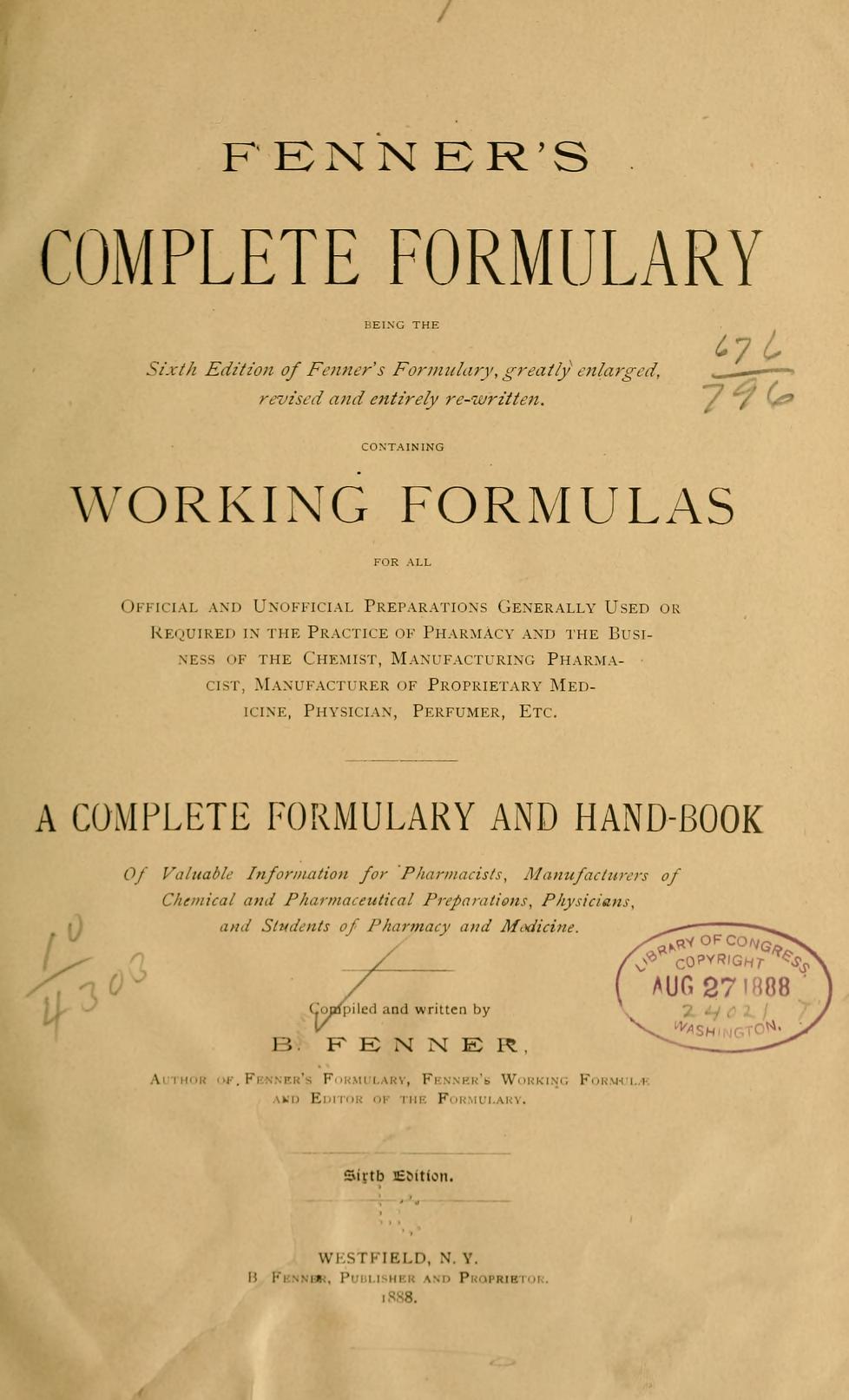
Here’s an example of an early Botanical Pharmacist…who would have been working closely with Eclectic Physicians and the like… He was the author of the book of which I posted an image of at the beginning of this post.
(By the way, here is a link to the on-line version of Fenner’s Formulary.)
“Byron Fenner (1844-1926) was the son of a physician from Chautauqua County, NY. Trained as an analytical chemist, he also had a keen interest in botanical pharmacy and medical research. He authored numerous articles for pharmacists, owned a botanical drug company (Fenner & Thayer), patented an innovative water bath percolator and still, and published the first edition of his famous Formulary in 1874.
This comprehensive work quickly became a standard reference for pharmacists in the U.S. and went through numerous editions. Once you get used to the 19th century language, you’ll find it to be a rich source of information on all kinds of botanical extraction techniques and preparations. Fenner often refers to standard practices established by the U.S. Pharmacopoeia, and suggests improvements that are obviously based on extensive hands-on experience with the plants.”
~ words by Lisa Ganora, Herbalist and author of Herbal Constituents
 Lindsay Kolasa